Why Warm Leads Go Cold: And How Lead Nurturing Fixes the Gap

What lead nurturing is, why most businesses skip it, and the 10 keys to keeping prospects moving toward a decision, whether you're running a service business or selling online.

In this article, we unpack:

You paid to get their attention.

They clicked. They enquired. They showed genuine interest.

And then nothing.

Not because they weren’t serious. Not because a competitor was cheaper. But because the timing wasn’t quite right, life got in the way, and your business quietly disappeared from their radar while they were still deciding.

That’s not a lead generation problem.

It’s a nurture problem. And it’s one of the most common and costly gaps in modern marketing.

what-is-lead-nurturing

What is lead nurturing?

Lead nurturing is the process of building a relationship with a prospective customer over time. Staying useful, relevant and visible while they move toward a decision.

It is not about chasing. It is not about sending the same “just checking in” email every fortnight until they unsubscribe.

It is about understanding that buying decisions, especially higher-value ones, rarely happen in a single moment. People need time to understand the offer, compare their options, build confidence and reach the point where the timing feels right. Lead nurturing is what keeps your business in the conversation while all of that is happening.

This applies whether you’re running a service business or an online store.
For service businesses, think consultants, trades, health practices, agencies or financial advisers, the decision cycle can run weeks or months. Nurture here is about education, reassurance and relationship.

For ecommerce businesses, the cycle is often shorter, but nurture still does critical work: recovering abandoned carts, turning first-time buyers into repeat customers, and keeping your brand relevant between purchases. Research consistently shows that retaining an existing customer costs a fraction of acquiring a new one, which makes nurture an ROI story, not just a marketing extra.

The pace differs. The principles don’t.

The gap is bigger than most businesses realise

Here’s a number worth sitting with.
the-gap-is-bigger-than-most-businesses-realise

Not a weak strategy. No strategy.

That means the majority of businesses are generating leads, spending money and effort to get people to raise their hand, and then leaving those people to figure it out on their own. Some will buy anyway. Most will drift.

If you’ve ever wondered why your conversion rate feels lower than it should, or why competitors seem to be winning customers you thought were yours, the nurture gap is often a significant part of the answer.

The good news is that the gap is fixable. And you don’t need to fix everything at once.

10 keys to effective lead nurturing

Before you work through these, it’s worth noting that many of them assume a clear understanding of who your customer is and what drives their decision. If that foundation isn’t solid yet, the 19 steps to developing your Unique Selling Proposition is a good place to start, or to work on in parallel.

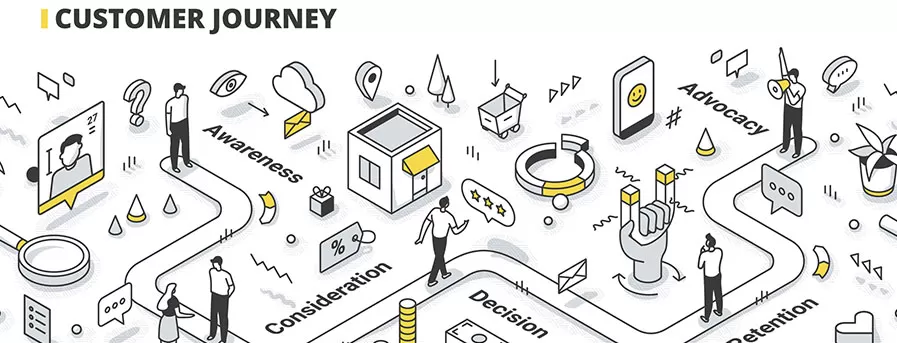
1. Know your buyer's journey

Not every lead is in the same place. Some have just discovered they have a problem. Others are actively comparing solutions. A few are almost ready to commit.

The content and communication that helps someone at the awareness stage is very different from what helps someone who’s nearly ready to decide. Map the stages your buyers move through and make sure your nurture reflects where they actually are, not just where you’d like them to be.

2. Personalise beyond the first name

Personalisation in 2026 means more than dropping someone’s name into an email subject line.

It means segmenting by interest, behaviour or business type. It means sending content that’s relevant to the specific problem they came to you with. It means making the prospect feel understood, which, as we explore in why niche clarity builds trust faster, is one of the most powerful things your marketing can do.

When someone feels like you’re speaking directly to their situation, they pay attention. When they feel like they’re on a generic list, they don’t.

3. Lead with content that's actually useful

The instinct is to push people toward a sale. The reality is that useful content does more selling than a pitch ever will.

Early in the journey, educational content builds trust and establishes credibility. Blog articles, explainer videos, guides and FAQs all do this well. As prospects move into the consideration stage, case studies, testimonials and comparisons become more valuable. The goal at each stage is to answer the question they’re actually asking, not the one you wish they were asking.

4. Stay consistent across channels

People don’t experience your business through a single channel. They find you through search, see you on social media, receive your emails, and perhaps walk past your shopfront or find you on a review platform.

Consistent communication across those touchpoints keeps your business present without being intrusive. It’s not about being everywhere. It’s about showing up reliably where your prospects already spend their time. As we explored in how buyer behaviour has shifted in 2026, buyers are now doing more of their decision-making before they ever contact you. Your nurture needs to be working in that pre-contact phase, not just after an enquiry lands.

5. Follow up faster than feels necessary

Speed matters more than most businesses realise.

An MIT Lead Response Management Study found that the odds of qualifying a lead drop more than six times within the first hour of an enquiry, and firms that respond within an hour are seven times more likely to have a meaningful conversation than those who wait even one hour longer (Harvard Business Review). Yet the majority of businesses don’t have a reliable system for rapid follow-up.

This isn’t just about being first. A fast response signals to the prospect that you’re organised, that you value their time, and that working with you will feel similarly responsive.

6. Use automation to do the consistent work

You cannot manually nurture every lead at the right moment. Nor should you try.

Marketing automation, when properly set up, handles the consistency so you can focus on the human moments that actually require you. Welcome sequences, follow-up emails triggered by behaviour, reminders and re-engagement campaigns can all run in the background, keeping relationships warm without demanding your constant attention.

The key word is properly. Automation built without a clear strategy tends to feel robotic and gets ignored. Automation built around genuine value and the real buyer journey tends to feel surprisingly personal.

7. Score your leads so your attention goes where it counts

Not all leads deserve the same level of attention right now.

Lead scoring is the practice of rating prospects based on their behaviour and engagement: how often they open your emails, what content they’ve consumed, whether they’ve revisited your pricing page, how recently they made contact. Higher scores indicate higher readiness.

For businesses managing a significant volume of leads, this is what separates efficient sales processes from exhausted ones. Your CRM should be surfacing the leads most likely to convert so your energy isn’t spread evenly across people at very different stages

8. Use multiple channels without spreading too thin

Email remains the backbone of most nurture strategies, and for good reason. It’s direct, measurable and controllable. But email alone isn’t enough.

Retargeting ads keep your brand visible to people who’ve already shown interest. Social media reinforces credibility and keeps you present. SMS has a role for time-sensitive or high-intent moments. For businesses with physical locations, in-person touchpoints are part of the sequence, too.

The goal isn’t to use every channel. It’s to use the channels your buyers actually use, at the moments that make sense.

9. Track what's actually working

Nurture without measurement is just activity.

Open rates have become less reliable as a standalone metric, because privacy changes mean they can be artificially inflated. Click-through rate is now a more meaningful signal, because a click reflects a real action: the message was relevant enough to prompt engagement.

Beyond email metrics, track conversion at each stage of the journey. Where are leads dropping off? Which content is moving people forward? Which sequences are producing sales conversations and which are producing silence?

Data doesn’t just tell you what’s working. It tells you what to fix first.

10. Use a CRM to hold it all together

A good CRM is what turns a collection of nurture tactics into a functioning system.

It holds the history of every interaction. It surfaces leads that need attention. It enables automation without losing the context of the relationship. And it gives you the visibility to make decisions based on what’s actually happening in your pipeline, rather than what you assume is happening.

Without a CRM, lead nurturing tends to be reactive and inconsistent. With one, it becomes something you can build on and improve over time.

Where to start

If you’re reading this and recognising the gap, you don’t need to build everything at once.

Start with the foundation: a clear picture of who your customer is and what drives their decision. Then build the first sequence, a simple and consistent follow-up that adds value and keeps the conversation going. Measure it. Improve it.

The businesses that get the best results from lead nurturing aren’t the ones with the most sophisticated systems. They’re the ones that started, refined over time, and didn’t leave warm leads to go cold.

FAQs

What is lead nurturing?
Lead nurturing is the process of building a relationship with a prospective customer over time. It helps your business stay useful, relevant and visible while someone is considering their options and moving toward a decision.
Warm leads often go cold because the timing is not quite right, they need more information, or they simply get distracted before making a decision. Without a consistent follow-up process, your business can quietly disappear from their radar.
No. Lead nurturing is useful for both service and ecommerce businesses. Service businesses often use nurture to support longer decision-making cycles, while ecommerce businesses can use it to recover abandoned carts, encourage repeat purchases and build customer lifetime value.
A CRM makes lead nurturing much easier because it keeps your contacts, conversations, follow-up tasks and automations in one place. Without a CRM, nurture often becomes reactive, inconsistent and hard to measure.
Start with a simple follow-up sequence that answers the questions your prospects are already asking. Focus on being helpful, consistent and relevant. From there, you can add segmentation, automation, lead scoring and better reporting over time.

Ready to stop warm leads slipping through the cracks?

If you’re reading this and recognising the gap, the good news is you don’t need to build the whole system overnight.

You may simply need to start with a clearer view of what happens after someone enquires. Where are leads coming from? How quickly are they being followed up? What are they receiving after that first contact? Are they being educated, reassured and guided, or are they being left to remember you on their own?

That is where a good nurture strategy begins.

At Vizzably, we help businesses review, build and improve the systems that turn scattered follow-up into a more connected marketing and sales process. That may include CRM setup, nurture sequences, automation, content, tracking and the practical strategy that holds it all together.

Because warm leads should not be left to quietly go cold.

If you’d like to explore how your follow-up, CRM and nurture strategy could work together more effectively, start with a conversation.

References

Share this article

Contact us now

* indicates required fields

This field is for validation purposes and should be left unchanged.
Full Name*